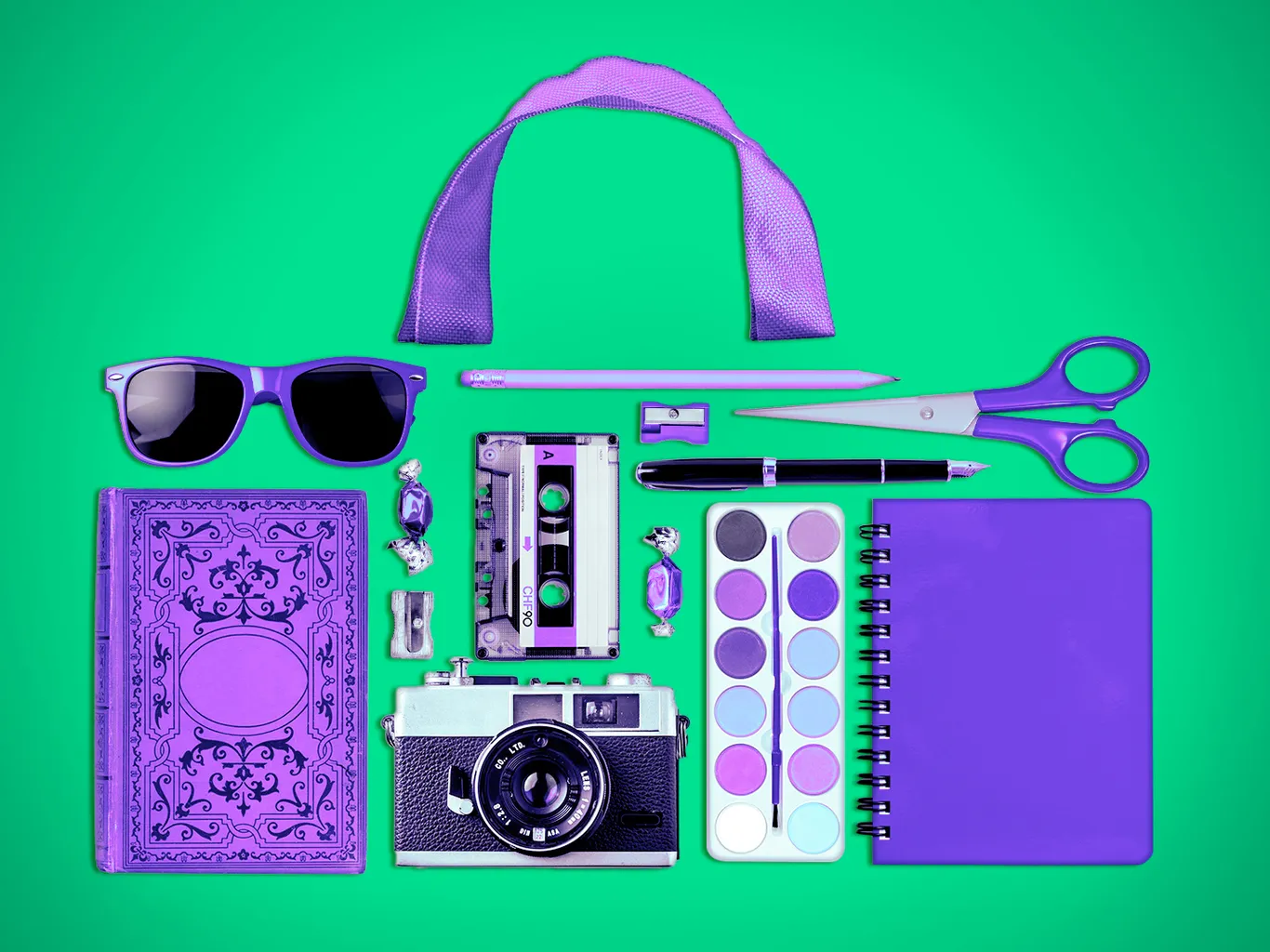
A growing trend on TikTok is encouraging users to swap doomscrolling for hands-on hobbies — all by carrying what creators are calling an “analog bag.” The idea is simple: fill a small tote with screen-free activities so you always have an alternative to reaching for your phone.
For creator Sierra Campbell, the analog bag has become one of her four daily essentials, right alongside her phone, wallet, and keys. But unlike her digital devices, the tote isn’t for convenience — it's her portable escape from mindless scrolling. Stocked with crossword puzzles, knitting tools, and even watercolor paints, the bag helps her stay engaged with the world instead of disappearing into endless feeds.
Campbell, now 31, sees the analog bag as one of her strongest defenses against what she calls “brain rot.” She believes that constant phone use robs people of meaningful experiences. When she posted about the concept on TikTok in August, the video exploded, signaling that many others felt the same frustration.
Since then, countless young women have embraced the trend, sharing their own variations online — complete with disposable cameras, needlepoint kits, puzzle books, and more. The movement may seem paradoxical on a platform built for short-form content, but its message isn’t anti-tech. Instead, it’s about using technology on purpose, especially during idle moments like commuting or waiting for a friend.
According to Campbell, the real issue is how easily we surrender our attention. She remembers her parents warning her to “count the cost” — not in dollars, but in focus. For her, the convenience of smartphones has come with a steep mental price.
Ohio school principal Emily Karst was one of the first to adopt the practice after seeing Campbell’s post. She describes herself as someone who often reaches for her phone purely out of habit. By packing her analog bag with needlepoint supplies, a watercolor set, and a “memory-collecting” journal, she has dramatically reduced her daily screen time.
Karst says she realized she’d been losing her capacity to engage deeply with books, movies, and art. The analog bag became her way of interrupting that cycle. If something purposeful is within arm’s reach, she explained, it becomes far easier to choose it over the dopamine rush of short-form content.
Campbell credits Charles Duhigg's book “The Power of Habit” for inspiring the concept. The idea isn’t to quit your phone cold turkey — it’s to replace the impulse with a healthier alternative. For her, that means always having analog activities on hand, from a Polaroid camera to a physical planner, so she never defaults to scrolling.
Experts have long warned about the effects of overusing digital media. Tech veterans like former Facebook executive Tim Kendall have described phone use as a hidden health issue. Research now links excessive short-form media consumption to anxiety, depression, and weakened attention spans. Even AI systems degrade when overexposed to low-quality content.
Still, fully unplugging isn’t realistic for most people. Instead, TikTok’s analog-life advocates aim for intentional tech use. They want to choose when to engage — not fall into it automatically.
Healthcare worker Hannah Hofstetter, 23, remembers this moment of clarity vividly. She found herself scrolling TikTok without knowing why she’d opened the app in the first place. After discovering analog bags, she immediately recognized the habit loop for what it was.
Now, during quiet moments with friends, she skips the instinctual phone reach. Instead, she dips into her analog bag and pulls out something meaningful — often a deck of Tarot cards. For her, it’s a small but powerful reset.