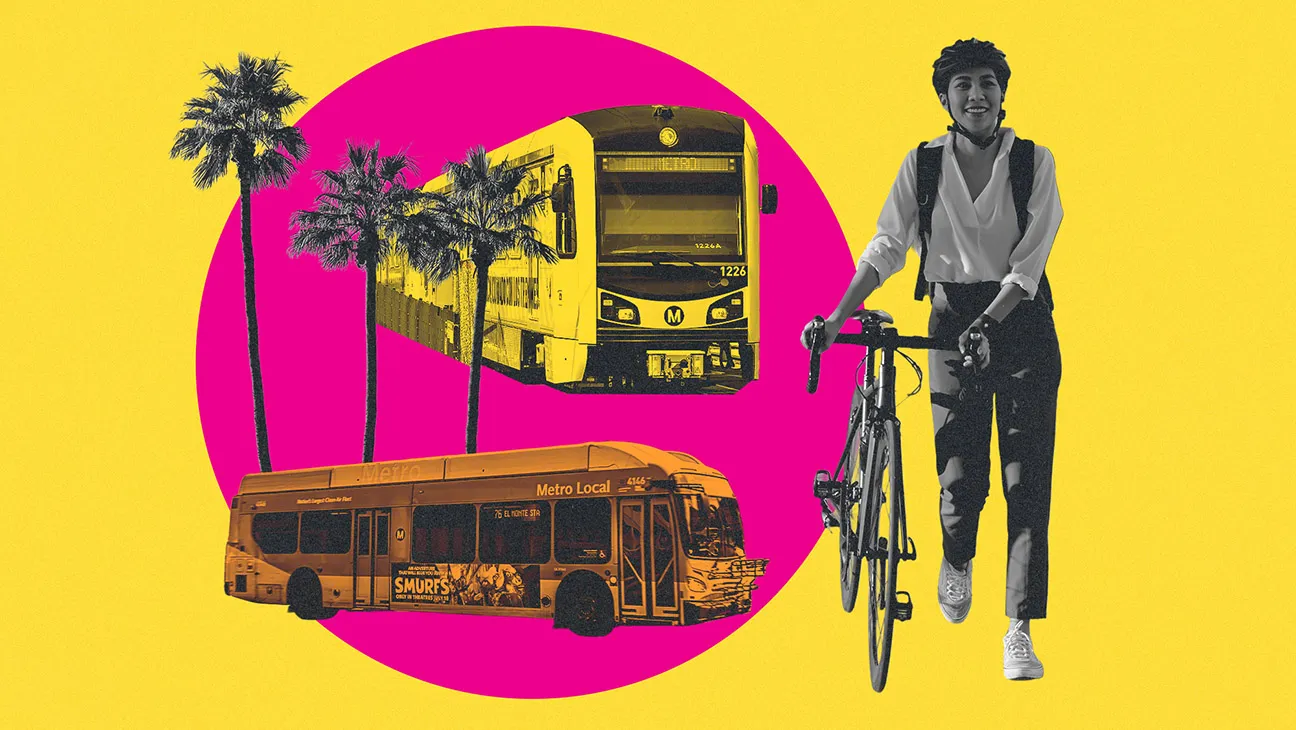
Hollywood has long cultivated the image of Los Angeles as a city built for cars — a place where daily life unfolds from behind a windshield. Films have often highlighted this for humor, such as Steve Martin driving to his next-door neighbor’s house in the 1991 comedy *L.A. Story*, or scenes from the 2015 *Entourage* movie where walking is treated as bewildering behavior. This portrayal has helped reinforce the stereotype that Angelenos simply don’t walk or rely on public transit. Yet beneath this familiar Hollywood narrative, a quieter movement is unfolding among those who work in the entertainment industry.
This shift aligns with broader generational trends: according to research from McKinsey, members of Gen Z appear less attached to the idea of driving compared to previous generations. For younger people entering Hollywood today, the idea of owning a car is not necessarily a given. For some veteran industry workers, navigating the city without a vehicle has long been a part of their routine and identity. Their experiences offer a different look at how life and work can function in a city famous for traffic jams and freeways.
One example is writer and producer Bill Wolkoff, whose credits include *Star Trek: Strange New Worlds* and *The Man Who Fell to Earth*. Nearly twenty years ago, Wolkoff’s car broke down at a time when he was working as a script coordinator, a job not known for generous pay. Faced with the high cost of replacing his vehicle, he instead purchased a bike. The decision became permanent. Today, Wolkoff still rides to work from his home in Mount Washington, describing the experience as grounding and community-oriented. He explains that traveling by bike keeps him connected to the city in a way driving cannot.
“When we’re in our cars, it really does separate us,” Wolkoff says. “It compartmentalizes us and strips away our sense of community.” By contrast, biking allows him to see the city at street level, interact with neighbors, and observe the rhythms of everyday life. Avoiding gridlock, he says, is just a bonus.
Comedian and host Adam Conover came to public transit from a place of frustration. During his early years in Los Angeles, he commuted daily between the Eastside and Westside in a 2010 Prius, describing the experience as “miserable.” Eventually, he began riding the DASH bus instead, especially drawn by its affordability: just 35 cents with a TAP card. Conover argues that the common claim that Los Angeles “doesn’t have public transit” is misleading and harmful. He believes that repeating this myth discourages improvements and prevents residents from realizing the systems that already exist.
Others have found that going car-free can enhance their creativity and even their careers. Writer-producer Tom Smuts, known for his work on *Mad Men* and *Bosch*, once organized group bike rides to the Emmys to highlight sustainable commuting. Smuts continues to bike one or more times a week when working in central Los Angeles. He notes that movement helps him think clearly. Living with what he describes as medium ADHD, he often develops scenes and dialogue while biking or hiking, recording voice notes as ideas form in motion.
Mosaic manager and 2025 Next Gen honoree Drew Shenfield hasn’t owned a car since 2021. He primarily walks or takes buses, which is made easier by the fact that a large portion of Hollywood’s workspaces are clustered near Santa Monica and Sunset Boulevards. Shenfield says that being on foot leads to spontaneous encounters that have benefited his professional life. He frequently runs into colleagues, clients, and acquaintances while walking, sparking conversations that might never happen from inside a car.
Still, the car-free lifestyle remains uncommon. A UCLA Institute of Transportation Studies report from 2018 found that roughly 77 percent of Southern California households rarely or never use public transit. Yet the experiences of Wolkoff, Conover, Smuts, and Shenfield show that alternatives are not only viable, but sometimes enriching. Wolkoff recalls colleagues who once complained about their commutes eventually joining him on the train after realizing how stress-free it could be.
Los Angeles may always be associated with driving, but a growing number of Hollywood workers are demonstrating that the city can be experienced differently. For those willing to step outside the car, there are new connections waiting, new perspectives to absorb, and perhaps even a stronger sense of belonging.