
Exploring Love Across Borders: Our Time Will Come Confronts Culture, Identity, and Belonging
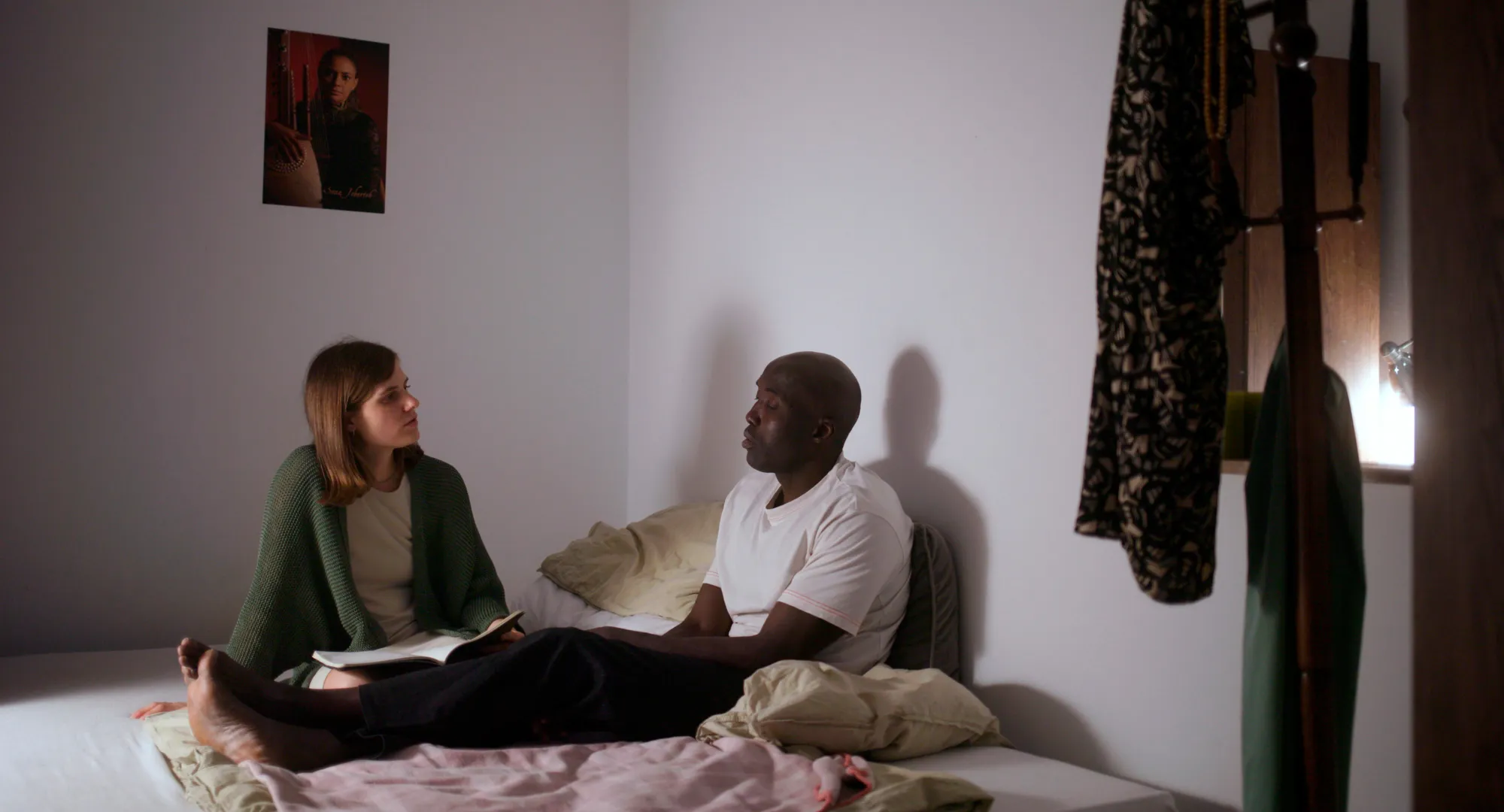
Austrian filmmaker Ivette Löcker has always turned to stories that center on human contact: how we relate, how we clash, and how we manage to coexist. Her new feature-length documentary Our Time Will Come (Unsere Zeit wird kommen) furthers that investigation, placing the viewer squarely in the middle of an intimate daily life as a couple navigates love across cultures. After its world premiere at the Berlinale, the film hits the Sarajevo Film Festival, screening in the feature documentary competition.
The film focuses on Victoria, an Austrian woman, and Siaka, her husband from Gambia. The couple comes back to Austria after having spent years in immigration limbo, with expectations to create a stable shared future. Their relocation to a foreign place is steeped in hope: dreams of stability, work, and starting a family. In reality, it is more complex. While they have great affection and commitment for each other, cultural differences, social barriers, and personal histories continue to shape their lives in subtle and sometimes painful ways.
Our Time Will Come switches between scenes set in Vienna and trips to Gambia, which root the couple's tale in both the European city they now call home and the West African community that shaped Siaka. Löcker fuses observational footage with intimate interviews, capturing quiet routines, disagreements, moments of tenderness, and conversations showing that sustaining partnership requires constant work when the outside world is often unwelcoming.
Although she resists labeling her approach, Löcker mentions a fondness for “a quiet, poetic visual style,” where gestures, looks, and silences say as much as words. The result is a film that never sensationalizes its subjects; instead, it watches, listens, and allows complexity to surface.
The film's backdrop is also political. As Austria has seen a rise in right-wing populism in recent years, public discourse around immigration has grown increasingly tense. The Berlin festival described the documentary as "a portrait of a love between cultures that endures despite all difficulties in an Austria increasingly moving toward authoritarianism." At one point in the film, Siaka voices his frustration simply: "Racism is a sickness." The statement resonates not only personally, but in a broader European context.
The origin of the project itself is unusual: instead of the director seeking out the couple, Victoria and Siaka approached Löcker directly, asking whether their story might be worth telling. The two women had first met years earlier at Diagonale, Austria's festival of film, where Victoria's short preceded Löcker's feature Ties That Bind. The connection endured, and as Victoria and Siaka's relationship unfolded, they reached out, believing their experience was one others might relate to.
Löcker followed the couple for about a year after Siaka obtained residency and work authorization—crucially, a time after the most urgent legal hurdles had passed. This allowed the film to focus not on bureaucracy, but rather how people carry on once the dust settles: how love adapts, how identity stretches, and how family takes shape. With the documentary now reaching wider audiences, Löcker is already preparing her next project, this time exploring the dynamics of female friendships and featuring multiple protagonists. For now, though, Our Time Will Come stands as a gentle, clear-eyed meditation on contemporary love—messy, hopeful, global, and deeply human.