Fridami Redefines Fashion and Art From Milan Runway to Red Carpet
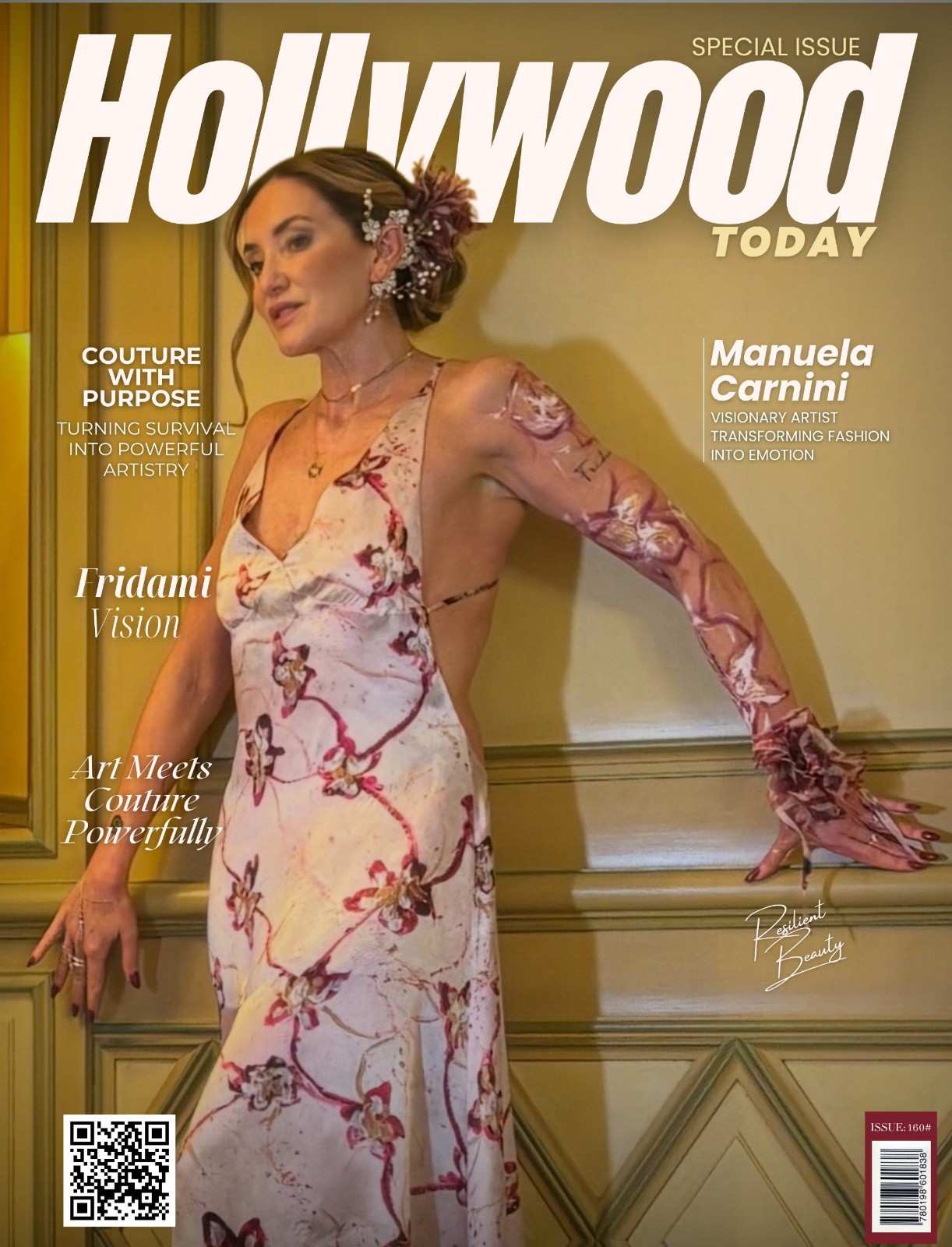
In a cultural landscape increasingly defined by speed and spectacle, few creators manage to slow the moment down—fewer still give it meaning. Manuela Carnini, known artistically as Fridami, belongs to that rare category. She is not simply participating in contemporary culture; she is reshaping it, building a language where art, identity, and lived experience exist as one.
And nowhere has that vision crystallized more powerfully than in her recent presence on the global stage—most notably at Milan Fashion Week on February 28, 2026, and across some of the most symbolically charged red carpets in the world.
These were not appearances. They were statements.
At Milan Fashion Week, Fridami did not present a collection in the traditional sense. She presented a philosophy—one that dissolves the boundary between art and fashion, transforming garments into vessels of meaning.
Her FRIDAMI – ART HAUTE COUTURE collection unfolded less like a runway show and more like a narrative in motion. Sixteen dress-artworks, each derived from her original paintings, moved through space with a quiet but undeniable force. The fabrics—primarily silk—did not simply drape; they carried emotion. Colors were not chosen for trend alignment but for their psychological and symbolic intensity.
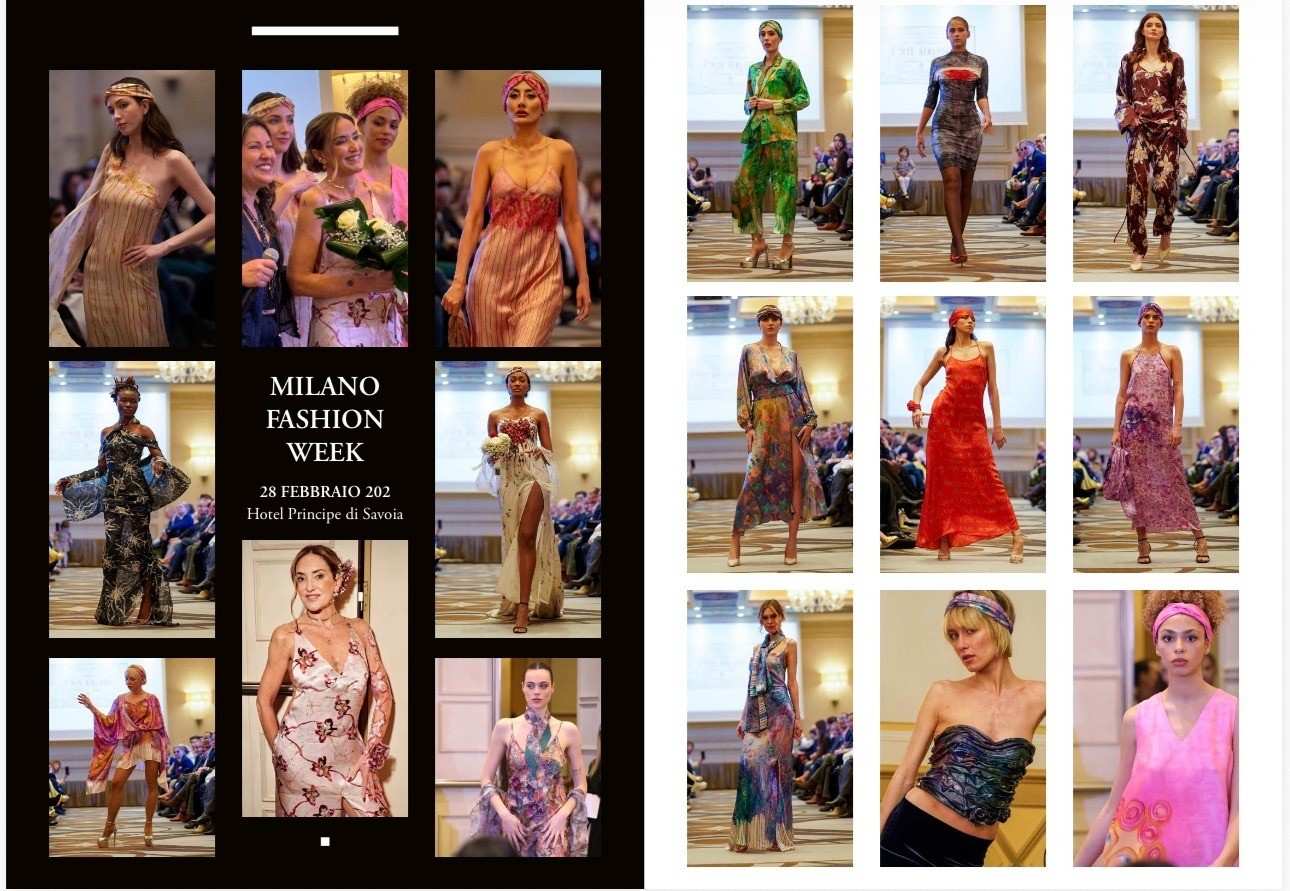
Each look told a story.
There was a striking coherence to the collection, yet no repetition. Every piece held its own identity, its own emotional charge. The signature hearts—central to Fridami’s artistic language—appeared not as decoration, but as living elements embedded within the garments. They pulsed through the prints, as if the fabric itself had memory.
This was not fashion designed to be consumed.
It was fashion designed to be felt.
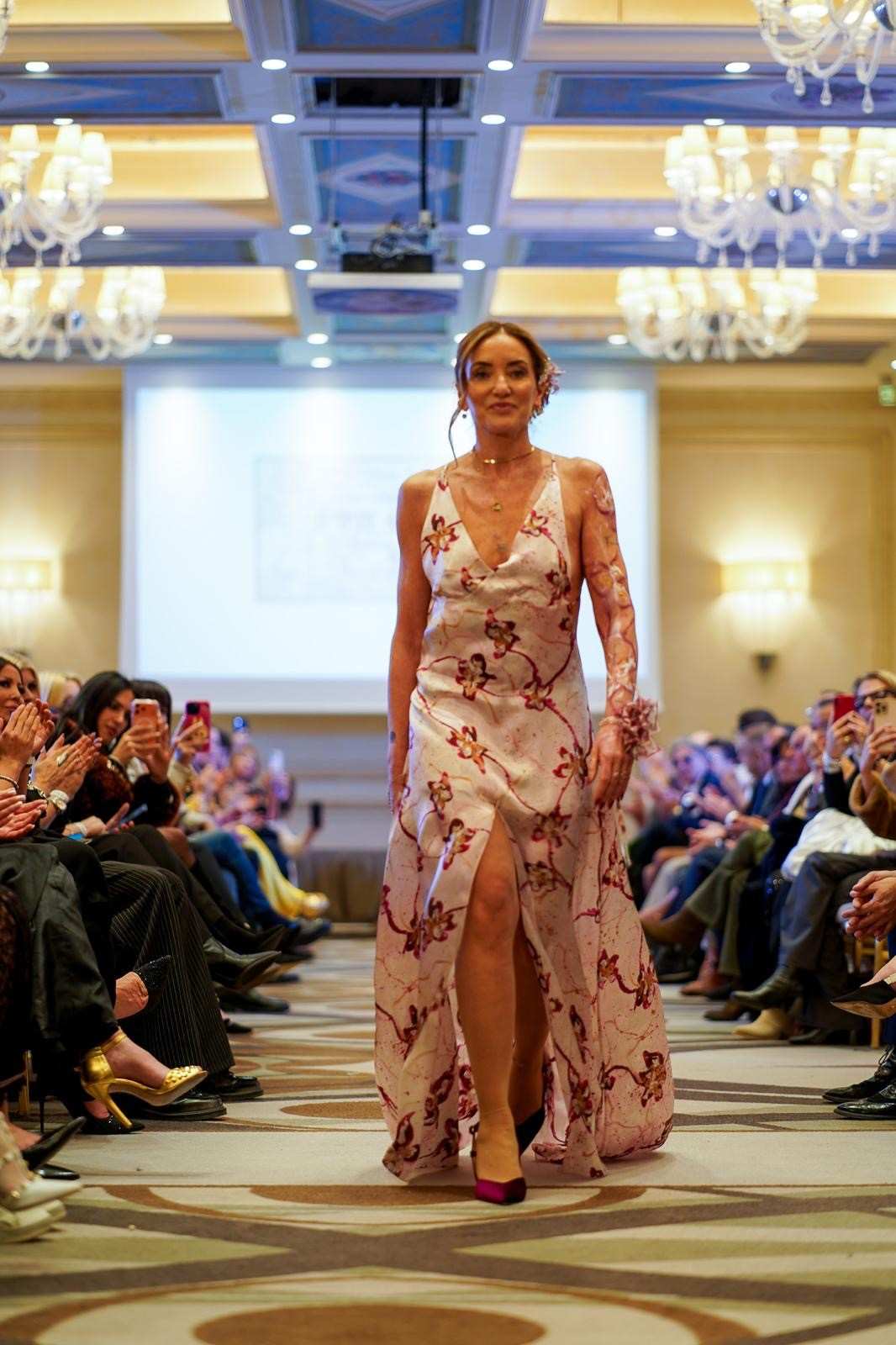
Among these creations, one piece stood apart with striking immediacy: the Dress-Opera “Eternal Real Beauty.” In this work, Fridami pushed her artistic language even further by extending the dress beyond fabric itself—painting directly onto her own arm. The gesture transformed her skin into a living continuation of the garment, blurring the boundary between body and couture.
The painted arm did not function as an accessory, but as an essential part of the composition—an organic extension of the Dress-Opera. In that moment, the artwork was no longer confined to what is worn; it became something embodied. “Eternal Real Beauty” revealed a powerful idea: that true beauty is not constructed externally, but lived, carried, and expressed through the self.
The models did not walk as mannequins; they moved as extensions of the artwork, embodying a deeper narrative about identity, vulnerability, and transformation. The silhouettes—fluid, open, often revealing—echoed a recurring theme in Fridami’s work: that true strength lies not in concealment, but in the courage to be seen.
And beneath the visual impact, there was a message—clear, deliberate, and urgent.
Each dress stood as a statement against violence toward women. In Fridami’s universe, beauty is not passive; it is active, resistant, and vocal. The garments become declarations—assertions that identity cannot be diminished, that trauma can be transformed, and that expression is a form of power.
In this sense, Milan Fashion Week became more than a prestigious platform. It became a stage for advocacy, for storytelling, for truth.
Fridami did not adapt to the language of fashion. She expanded it.
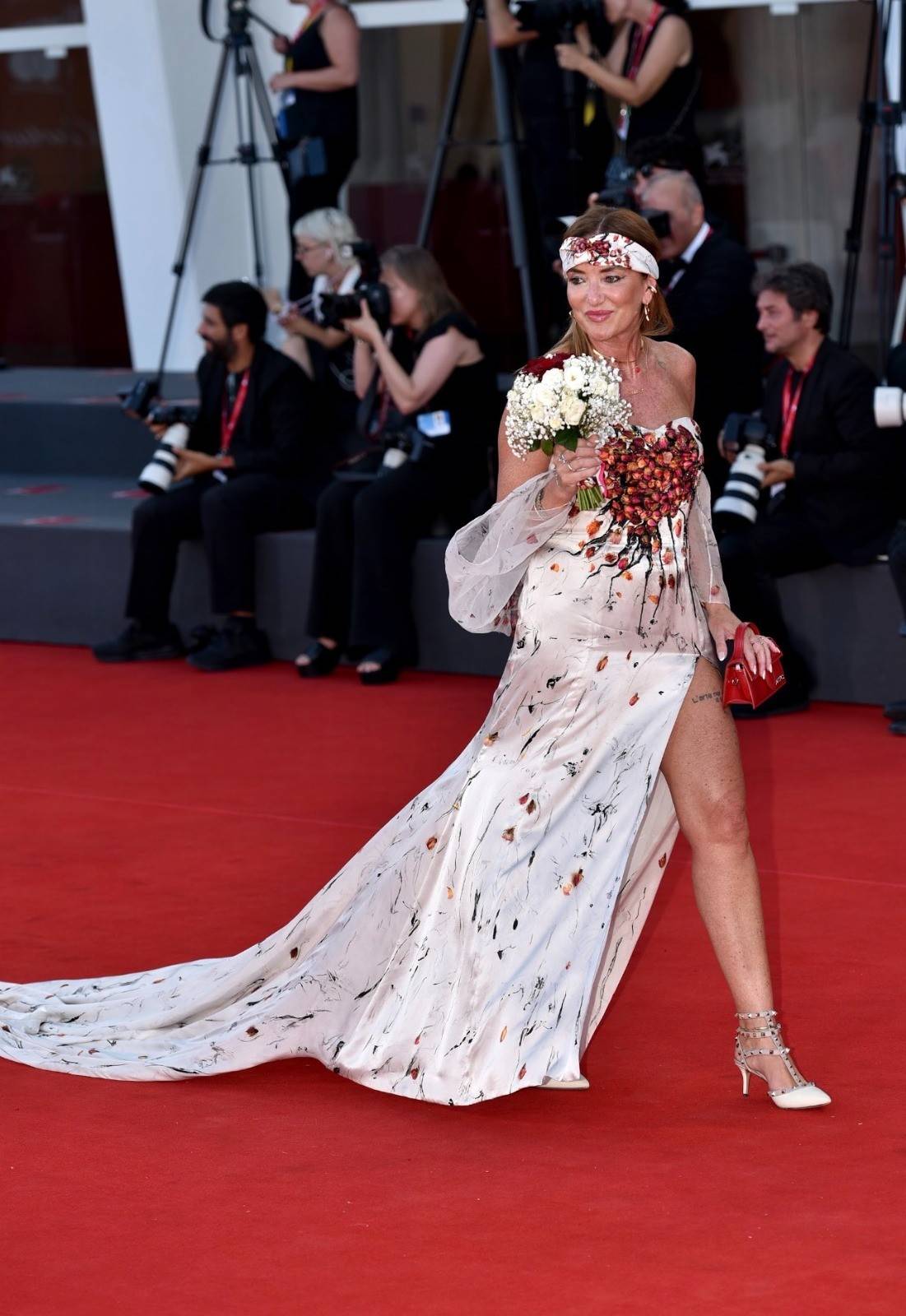
This same expansion defines her presence on the red carpet—most notably at the Venice Film Festival, where she introduced one of her most iconic creations: the Dress-Opera “Perfect Union – The Bride of Fridami.”
If Milan was a narrative in motion, Venice was a moment suspended in time.
The dress itself is a masterpiece of layered meaning. A silk satin bodice, structured yet delicate, holds an imperfect heart made of real, hand-sewn roses—each one embedded with beads and Swarovski crystals. This heart is not ornamental; it is autobiographical. It carries her experiences, her wounds, her love—preserved and transformed into something eternal.
The contrast of black and white fabric against deep crimson roses creates a visual tension—a union of opposites that speaks to the complexity of human experience. The three-meter train extends behind her, forming the shape of a heart, turning movement into symbolism.
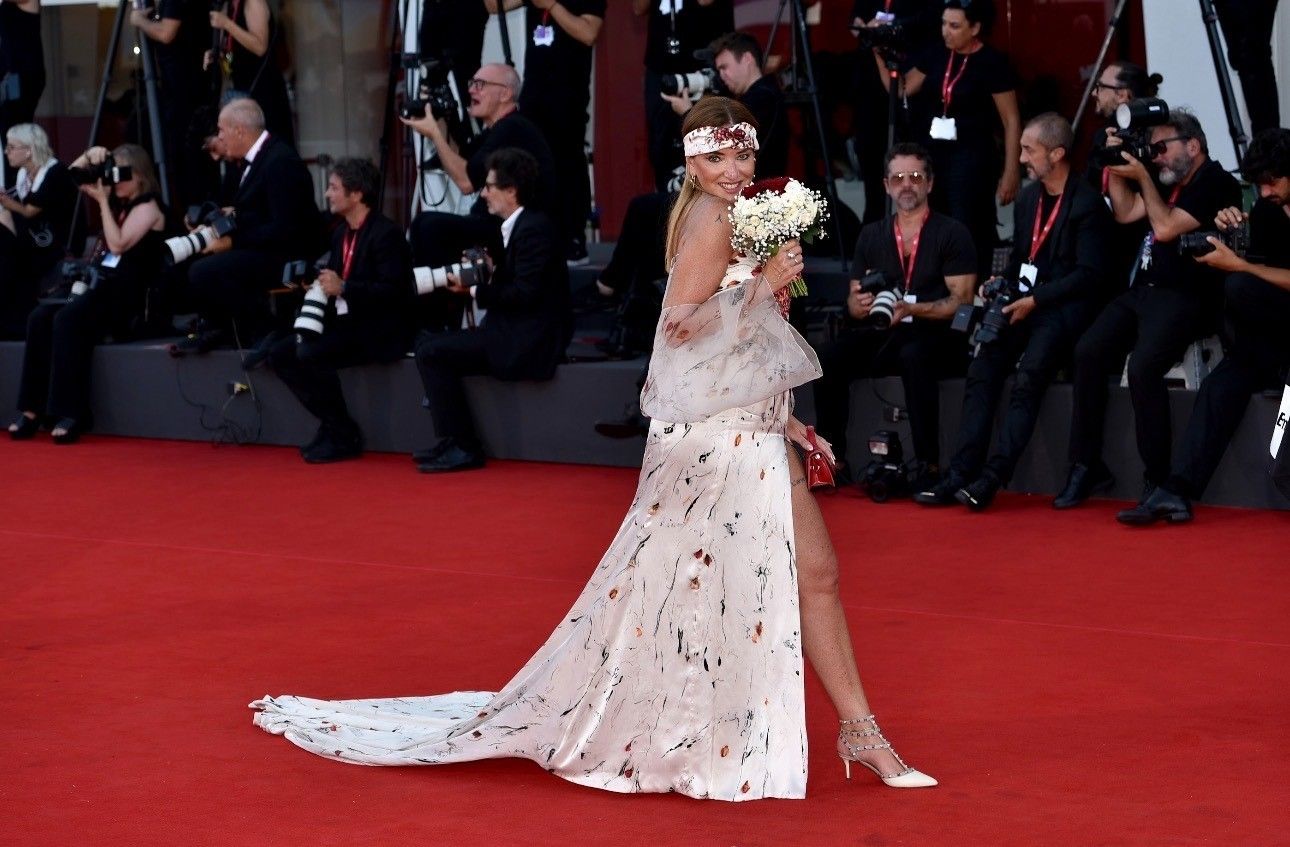
Every step becomes narrative.
The organza ring resting on the shoulders introduces a note of transparency—suggesting how love, in its truest form, penetrates both body and soul. It is a detail that speaks not only of beauty, but of exposure, of vulnerability embraced rather than hidden.
On that red carpet, Fridami did not simply wear a dress.
She wore a story.
And more importantly, she shared a truth: that survival is not about remaining intact—it is about transformation.
Her presence redefines what the red carpet can be. No longer just a site of glamour, it becomes a space of testimony. A platform where art meets lived experience, where aesthetics carry weight, and where fashion becomes a language of resilience.
This is the thread that connects Milan to Venice, couture to canvas, visibility to meaning.
Fridami’s work is deeply rooted in her personal journey as a survivor of violence—a reality she does not obscure, but elevates. Her creations suggest something profoundly important: that identity is not fixed, and that even in the face of fracture, it can be rebuilt—stronger, fuller, more luminous than before.
She did not survive to remain "alive".
She survived to become "art".
This philosophy permeates every aspect of her practice. It extends into her exhibitions, her public speaking, and her work with younger generations, where she teaches how to recognize the difference between love and its distortion.
It is also embodied in Casa Fridami—an immersive space where art becomes environment, where emotion becomes architecture, and where visitors are invited not just to observe, but to feel.
In a time when audiences are increasingly drawn to authenticity, Fridami stands at the intersection of disciplines and meanings. She is not confined to a single identity—artist, designer, storyteller—but instead integrates them into a cohesive, multidimensional vision.
That integration is her strength.
From the runways of Milan Fashion Week to the symbolic power of the Venice red carpet, Fridami is not simply building a career—she is shaping a cultural perspective.
One that suggests the future of creativity belongs to those who create with intention, who lead with truth, and who understand that art is not separate from life—but its most powerful expression.
Follow her journey:
Instagram:
https://www.instagram.com/fridami73